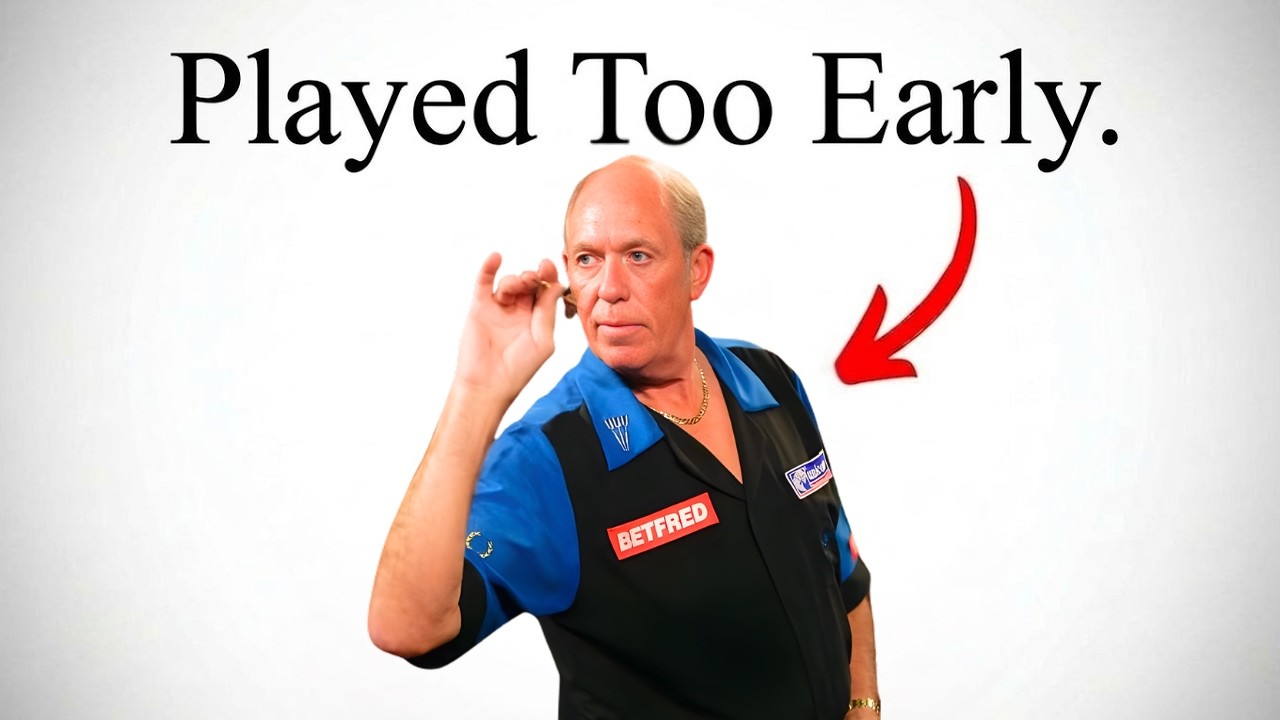
When professional darts was at its television peak, players arrived from pub sessions, smoked between legs, and drank on stage. Seventeen million people watched on Sunday afternoons, and the image was unmistakable — ordinary blokes doing extraordinary things while looking completely uninterested in being athletes.
These seven players looked at the same sport and saw something different.
A Canadian who learned darts by analysing World Championship broadcasts and tracking his practice averages in a notebook. A Singaporean chef who hit the first nine-dart finish in World Championship history in 1990 and is still winning competitive matches at 71. An Olympic-level javelin thrower whose horse walk-on at the 1995 PDC World Championship reportedly convinced Barry Hearn to get into darts. A man from Stoke who made toilet roll holders for £52 a week, borrowed £10,000 from his mentor, and became the most dominant competitor in any individual sport in history.
We cover all seven in full — what they understood, what it cost them, and why the sport eventually caught up with every single one of them.
RIGHT NOTICE: The Copyright Laws of the United States recognize a “fair use” of copyrighted content. Section 107 of the U.S. Copyright Act states: “Notwithstanding the provisions of sections 106 and 106A, the fair use of a copyrighted work, including such use by reproduction in copies or phonorecords or by any other means specified by that section, for purposes such as criticism, comment, news reporting, teaching (including multiple copies for classroom use), scholarship, or research, is not an infringement of copyright.” This video and our YouTube channel, in general, may contain certain copyrighted works that were not specifically authorized to be used by the copyright holder(s), but which we believe in good faith are protected by federal law and the fair use doctrine for one or more of the reasons noted above. Fair Dealing: Copyright, Designs and Patent Act 1988 (UK) section 30 states “Fair dealing” with a work for the purposes of criticism or review, of that or another work, does not infringe any copyright in the work provided that it is accompanied by a sufficient acknowledgement. Copyright in a work is not infringed by the use of a quotation from the work (whether for criticism or review or otherwise).———————————————————————————————————————–
Contact:
[amazon_auto_links id="551"]