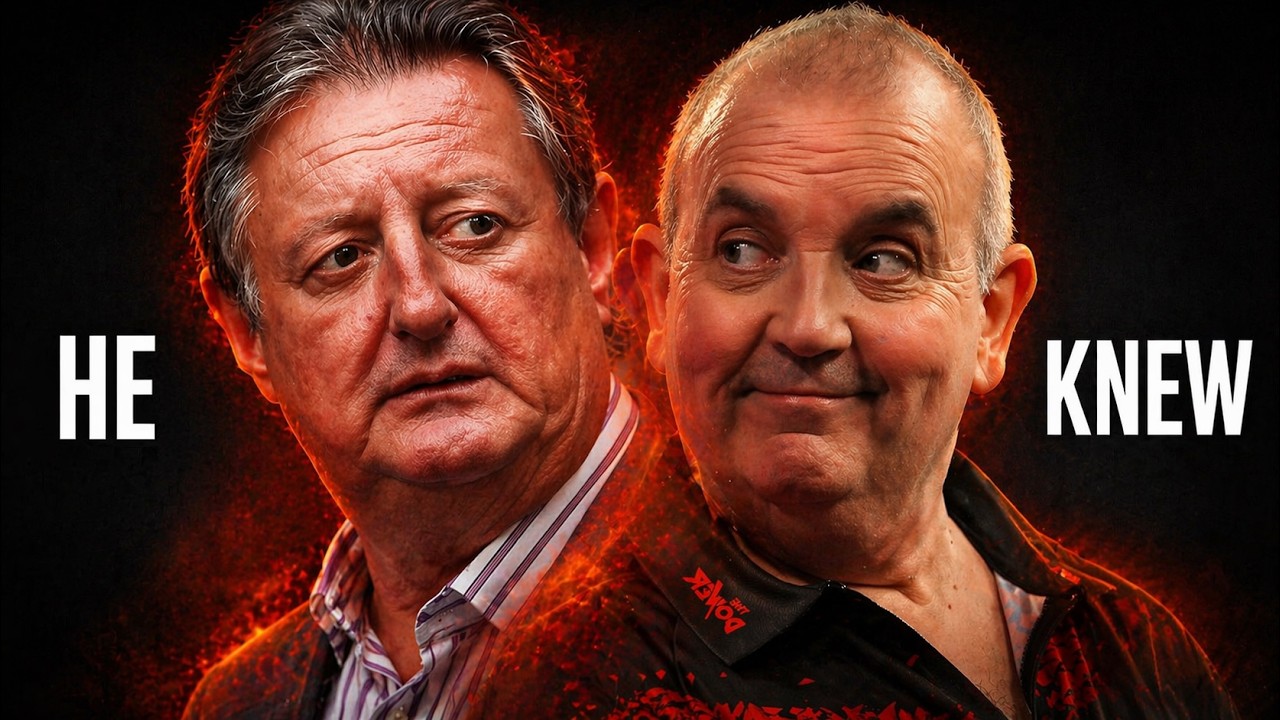
Eric Bristow was the best darts player on the planet. Five World Championships. The world number one ranking for most of a decade. Sid Waddell compared him to Alexander the Great on live television. And in 1988, at the height of his powers, he spent roughly ten thousand pounds of his own money on a ceramics factory worker from Stoke-on-Trent who was earning fifty-two pounds a week making toilet roll holders.
What Phil Taylor did with that money — and what it cost Bristow to watch it happen — is the reason people still argue about who the greatest darts player in history actually is.
Taylor learned to throw at a pub Bristow owned. Bristow shouted at him, slammed phones down on him, and refused to speak to him unless he had won. Then on January 13th, 1990, the master and the student met in the World Championship final at Lakeside. Taylor averaged 97.47. Bristow averaged 93. The student won six sets to one. And every record Bristow had ever set — the average record, the world title record, the world number one record — Taylor eventually took.
When Bristow died of a heart attack outside the Echo Arena in Liverpool on April 5th, 2018, Taylor’s tribute ended with a single hashtag: sixteen. One for every world title his mentor had made possible.
RIGHT NOTICE: The Copyright Laws of the United States recognize a “fair use” of copyrighted content. Section 107 of the U.S. Copyright Act states: “Notwithstanding the provisions of sections 106 and 106A, the fair use of a copyrighted work, including such use by reproduction in copies or phonorecords or by any other means specified by that section, for purposes such as criticism, comment, news reporting, teaching (including multiple copies for classroom use), scholarship, or research, is not an infringement of copyright.” This video and our YouTube channel, in general, may contain certain copyrighted works that were not specifically authorized to be used by the copyright holder(s), but which we believe in good faith are protected by federal law and the fair use doctrine for one or more of the reasons noted above. Fair Dealing: Copyright, Designs and Patent Act 1988 (UK) section 30 states “Fair dealing” with a work for the purposes of criticism or review, of that or another work, does not infringe any copyright in the work provided that it is accompanied by a sufficient acknowledgement. Copyright in a work is not infringed by the use of a quotation from the work (whether for criticism or review or otherwise).———————————————————————————————————————–
Contact:
[amazon_auto_links id="551"]